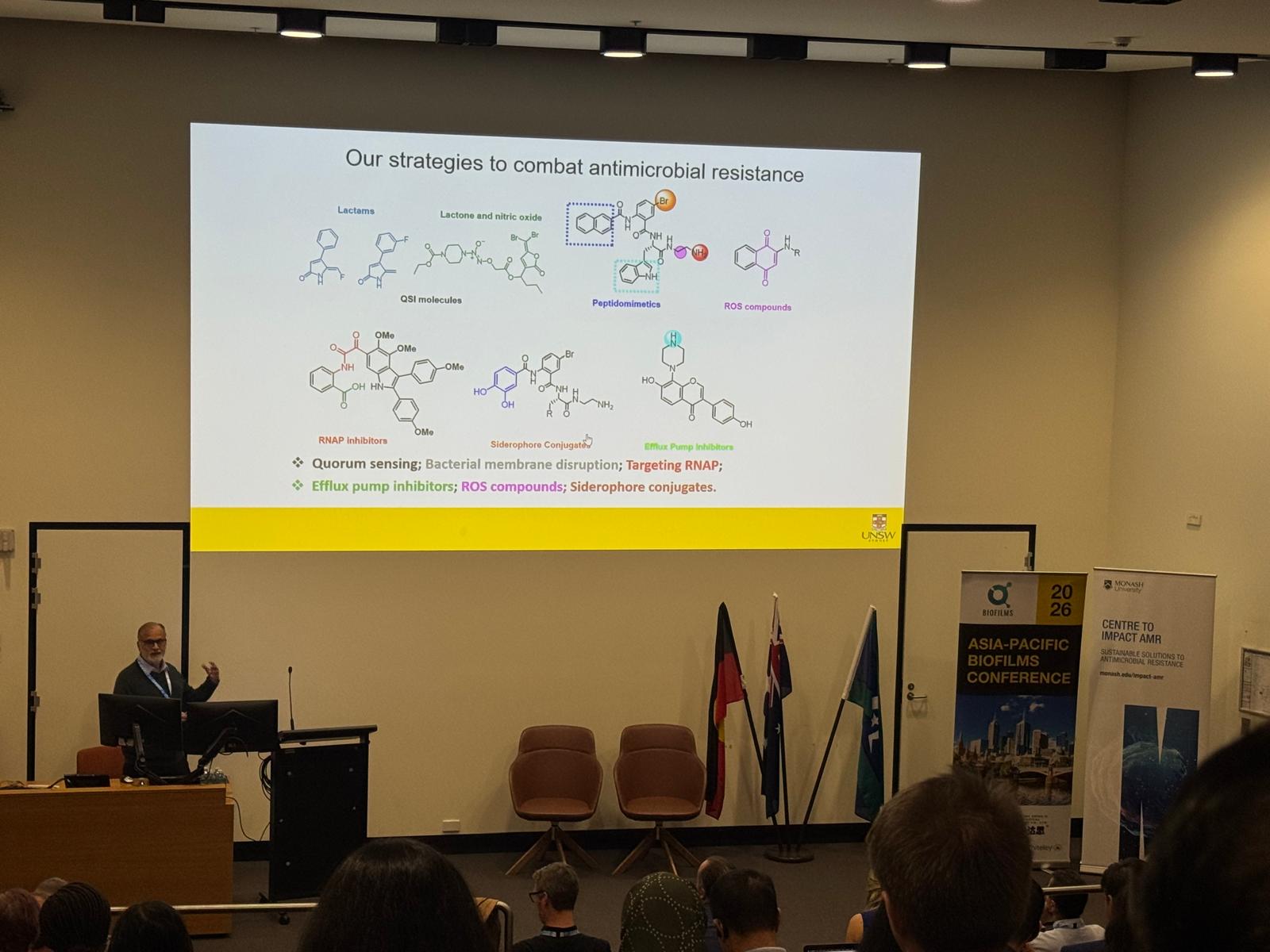
The Asia-Pacific Biofilms 2026 (APB 2026) conference, held at the Lecture Centre, The Alfred, 55 Commercial Road, Melbourne, VIC 3004, from 27 to 29 March 2026, brought together leading researchers from across the globe to share the latest advances in biofilm science and antimicrobial strategies.
The scope of APB 2026 included the molecular biology of biofilms, quorum sensing, environmentally, industrially, and clinically relevant biofilms, and emerging technologies to combat microbial biofilms. The conference also served as a major platform for promoting collaboration among biofilm researchers in the Asia-Pacific region and facilitating interactions with colleagues from Europe (EuroBiofilms) and the United States (ASM Biofilms).
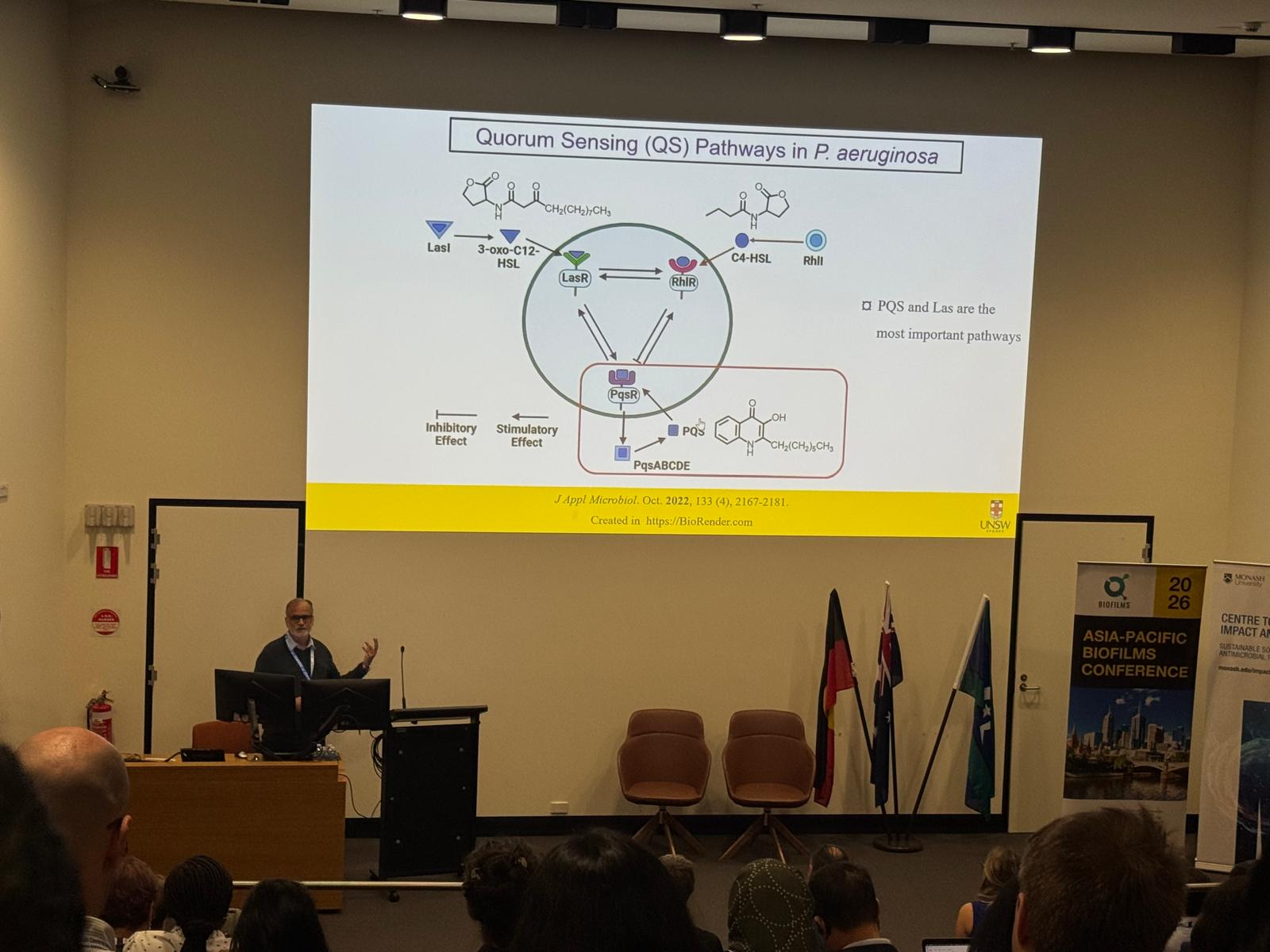
On the first day of the conference, Professor Naresh delivered a compelling talk titled "Novel Quinazolinone-Based PqsR Antagonists as Quorum Sensing Inhibitors in Pseudomonas aeruginosa." In his presentation, he highlighted the urgent need for new strategies to address antimicrobial resistance and discussed the role of quorum sensing in regulating virulence factors, including pyocyanin production and biofilm formation, in the WHO-designated priority pathogen Pseudomonas aeruginosa.
Professor Naresh presented his team's development of novel quinazolinone-based compounds targeting the PqsR receptor, a key regulator of the Pseudomonas quinolone signal system. The most potent compound strongly inhibited quorum sensing, suppressed pyocyanin production, significantly reduced biofilm formation, and showed synergistic activity with existing antibiotics at sub-MIC levels.
The talk generated lively discussion among attendees, with insightful questions raised both during and after the presentation. These interactions are expected to continue beyond the conference, potentially paving the way for new collaborations and future joint research initiatives.
Professor Naresh's work was widely praised and represents a promising step toward developing next-generation anti-virulence therapies, offering cost-effective strategies to combat antimicrobial resistance and improve treatment options for difficult-to-treat infections.
More moments from APB 2026